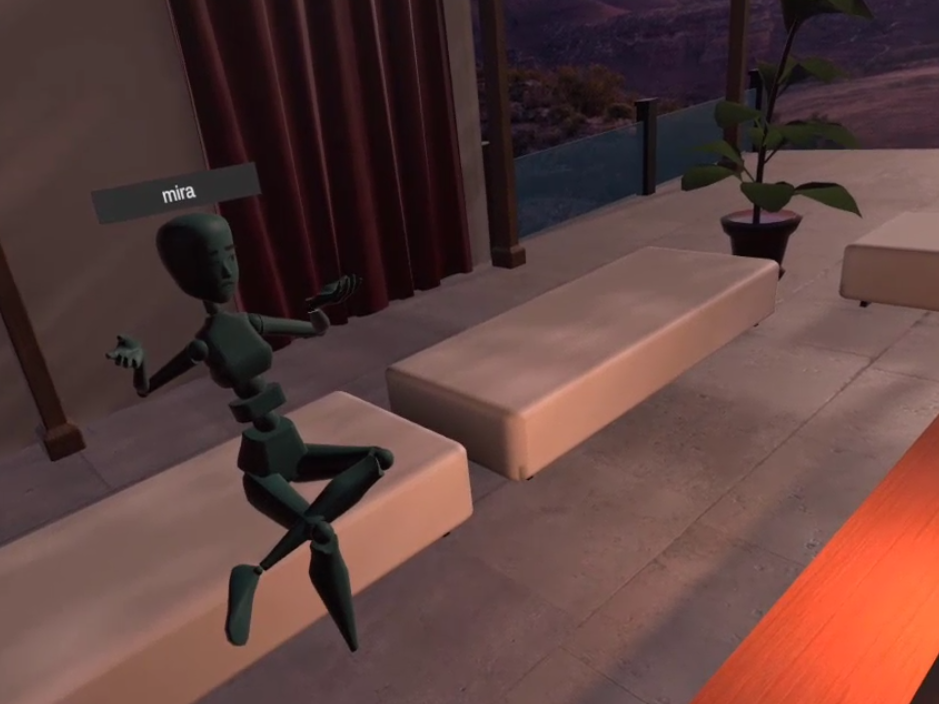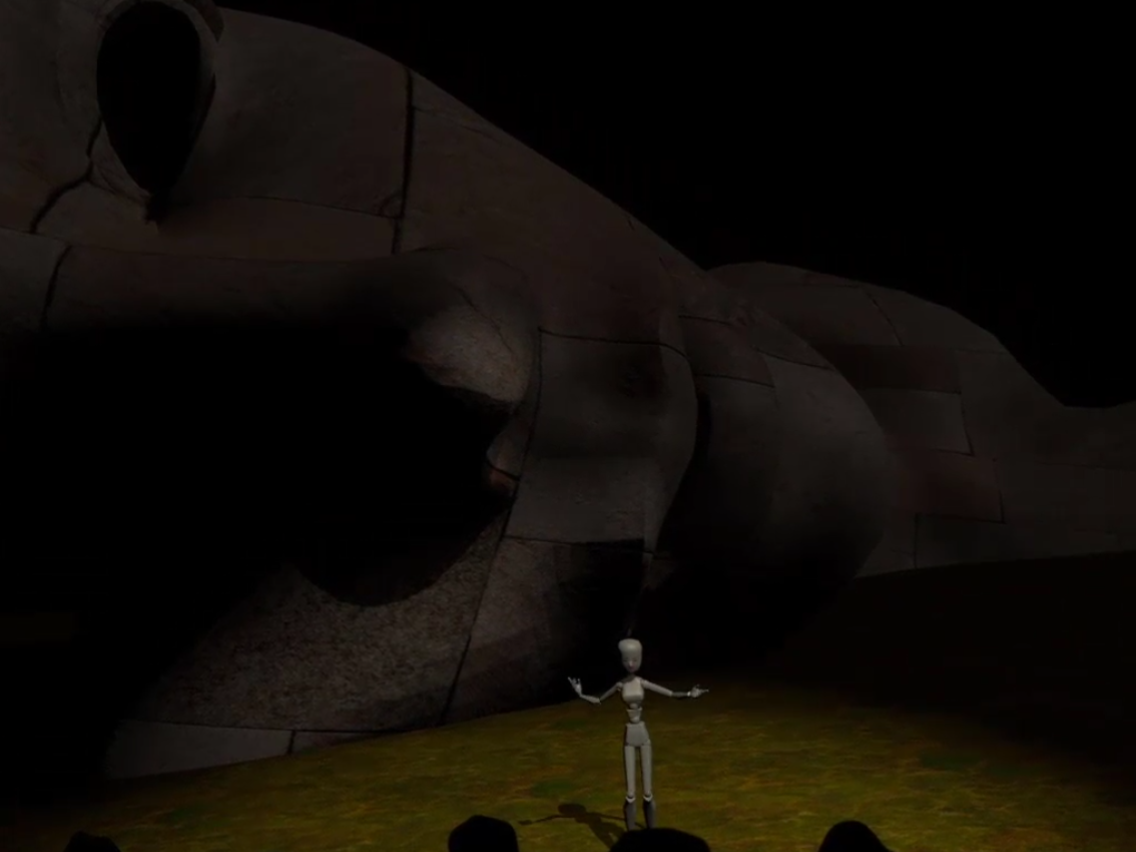
In recent studies on AI's application to social anxiety and mental health disorders, focus has shifted towards using conversational agents, initially rule-based and later LSTM models, and now predominantly transformer-based models for treatment. The advent of transformer technology, exemplified by Mixtral's 7B parameter model fine-tuned on comprehensive mental health datasets, has shown promising results, highlighting the efficacy of transformer-based LLMs in mental health care. Concurrently, virtual reality (VR) has been explored for its therapeutic potential, with studies comparing participant behavior in virtual environments to real-life interactions, indicating VR's viability in treating mental health issues. With advancements in extended reality (XR) and passthrough technology, new research avenues have emerged. However, comparing LLMs and real-life interactions (in vivo) directly has been challenging due to the inherent differences in interaction mediums. My thesis aims to bridge this gap by creating two systems: (1) an extended reality setup facilitating avatar-based interaction between users, simulating real-world exchanges, and (2) a similar environment where an avatar, powered by ChatGPT using text-to-speech and speech-to-text technologies, interacts with the user. These parallel systems allow for a more direct comparison between human and AI interactions in a controlled, virtual setting, setting the stage for a comprehensive analysis of their therapeutic potential.
Some results
- TBD
Primary participants
- Abdul Hadi Debs (MSDA)
Advisors: James Mahoney, Michael Cohen, Lorie Loeb